


As a native New Yorker, bagels are basically my lifeblood, and celiac disease hasn’t stopped me from eating one of my favorite foods.
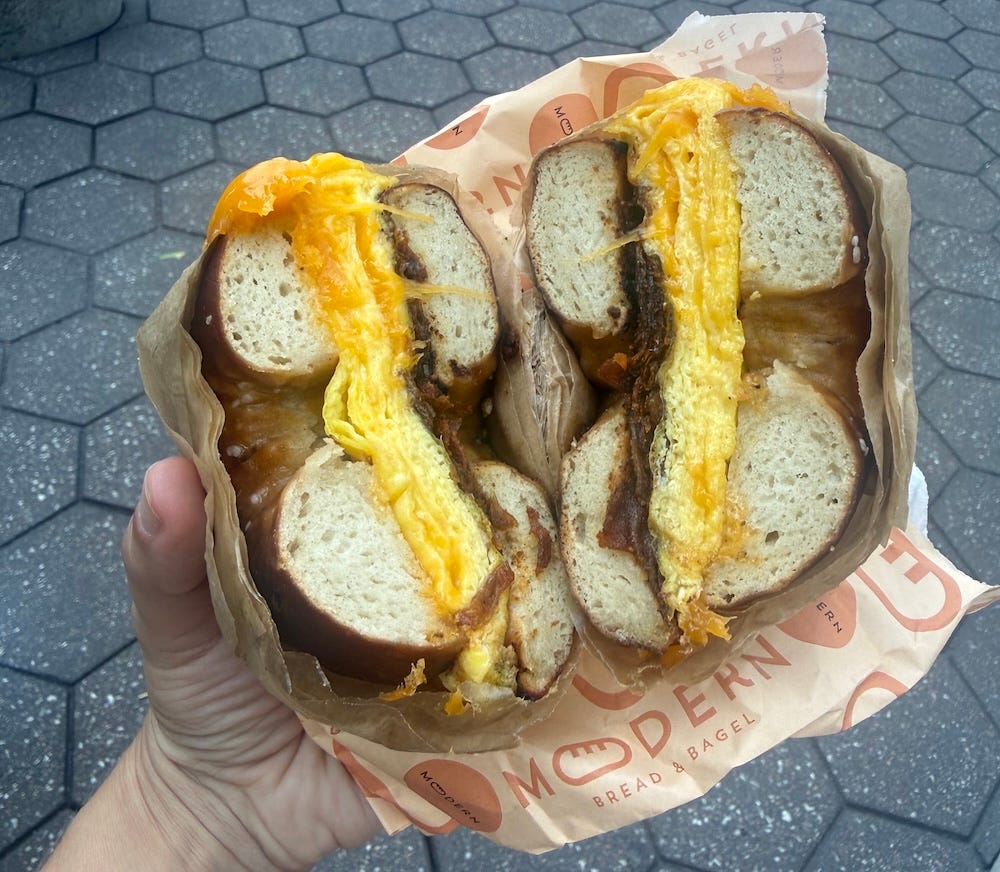
I’m lucky to have easy access to Modern Bread & Bagel, a dedicated gluten-free bagel shop and bakery in New York City (sometimes I’m there multiple times a week).
There are also a few store-bought gluten-free bagels I always keep stocked in my freezer for when a craving strikes (more on those later!).
But what about a regular bagel shop that offers gluten-free bagels? Is it possible to safely order a bagel from one of these establishments, or is the risk of cross-contact just too high?
Ahead, I chat with Selena Devries, RD, a British Columbia-based celiac dietitian living with celiac disease, about everything you need to know before placing an order at a regular bagel shop.
Table of contents:
What makes bagel shops risky for celiacs
How to navigate bagel shops with celiac disease
Bagel shop checklist for celiacs
The best gluten-free bagels and bagel shops
The best gluten-free bagel recipe
What makes bagel shops risky for celiacs
The risk depends, in part, on whether the bagel shop makes its bagels from scratch in-house or brings in bagels from another production or baking facility.
“Baking in-house introduces more risk for airborne flour, just like a bakery, and this is where we would want to be more careful,” explains Devries. Airborne flour can be a concern when wheat flour is being used consistently throughout the day, she says.
Devries points to a 2015 study that looked at commercial food preparation involving wheat flour and gluten-free items being made at the same time.
The study found that, under the specific conditions tested, having 6.5 feet of distance between the wheat-flour activity and the gluten-free preparation area was sufficient to keep the gluten-free food below 20 parts per million (ppm) of gluten.
However, Devries notes that it’s unlikely commercial baking environments are intentionally using a specific distance between gluten-containing and gluten-free preparation areas unless the staff is highly trained in celiac disease and gluten-free food preparation.
What’s more, “Even if the bagel is prepared safely, you then need to be mindful of ordering it, considering the toaster and any spread you may want on it, as these are other areas of cross-contact concern,” says Devries.
For example, if the same knife is used on a gluten-containing bagel and then dipped back into a shared container of cream cheese, the cream cheese could become contaminated with gluten.
How to navigate bagel shops with celiac disease
“Whenever you see something labeled ‘gluten-free’ at a restaurant—or in this case, a bagel shop—it’s important to remember that this refers only to the ingredients,” says Devries. “It does not automatically address the risk of cross-contact during preparation.”
If you’re following a gluten-free diet due to celiac disease, doing your best to minimize cross-contact is important, says Devries. This means asking a few more questions about how the bagel is prepared and handled.
Here’s what you should get more info on before ordering:
1. How the gluten-free bagels are made
First, find out whether the bagels are made in-house or brought in from somewhere else.
Using pre-packaged or frozen gluten-free bagels that aren’t baked on the premises can reduce some of the cross-contact risks associated with baking in an environment where wheat flour is being used, says Devries. However, you’ll still want to ask how the bagels are stored, sliced, toasted, and served.
If a bagel shop makes its gluten-free bagels in-house alongside its gluten-containing bagels, Devries suggests asking:
“How and when do you prepare your gluten-free bagels, and are they made separately from your gluten-containing bagels?”
“The bakeries that are more celiac savvy are going to be preparing the gluten-free bagels separate from the gluten ones and not making them at the same time,” says Devries. “If they make them at the same time as gluten bagels, I’d suggest avoiding it if you have celiac disease.”
2. How the gluten-free bagels are handled
If you determine that the gluten-free bagel is prepared in a way that you’re comfortable with, there are a few more steps you can take to minimize the risk of cross-contact.
You’ll want to ask an employee to:
Wash their hands or change their gloves before handling your bagel
Use a clean knife to cut the bagel
Prepare the bagel on a clean surface or piece of parchment paper
Use an appropriate method to toast the bagel without exposing it to gluten-containing food or equipment
Use a fresh container of cream cheese or butter to avoid cross-contact from a shared tub
“Depending on the bagel shop, if you say ‘celiac disease’ or ‘gluten allergy’ when ordering, they may automatically do some of the above, like changing gloves or using a clean knife,” says Devries. “Many shops also automatically put parchment paper down to prep bagels on because then they wrap the bagel up after they’re done with your order.”
So, while it may seem like you’re asking for a lot of safety precautions, often the main thing you really need to speak up about is ensuring that your spread comes from a fresh container rather than being taken from a shared tub, says Devries.
Bagel shop checklist for celiacs
Here’s a quick reference list of questions to ask at a bagel shop:
Are the gluten-free bagels made in-house or brought in?
If they’re made in-house, are they prepared separately from the gluten-containing bagels?
How are the gluten-free bagels stored and sliced?
How will my bagel be toasted?
Can you use a clean knife and clean preparation surface?
Can you use a fresh container of cream cheese or butter?
The best gluten-free bagels and bagel shops
Obviously, the safest option is going to a dedicated gluten-free bagel shop or preparing your own gluten-free bagels at home. Here are my top recommendations:
Modern Bread & Bagel: As I mentioned previously, Modern Bread & Bagel makes my favorite gluten-free bagels. They have storefronts in New York City and Los Angeles. They also ship nationwide.
Bare Naked Bakery: I’m also a big fan of the bagels at Bare Naked Bakery, which has multiple locations on Long Island. They also ship nationwide.
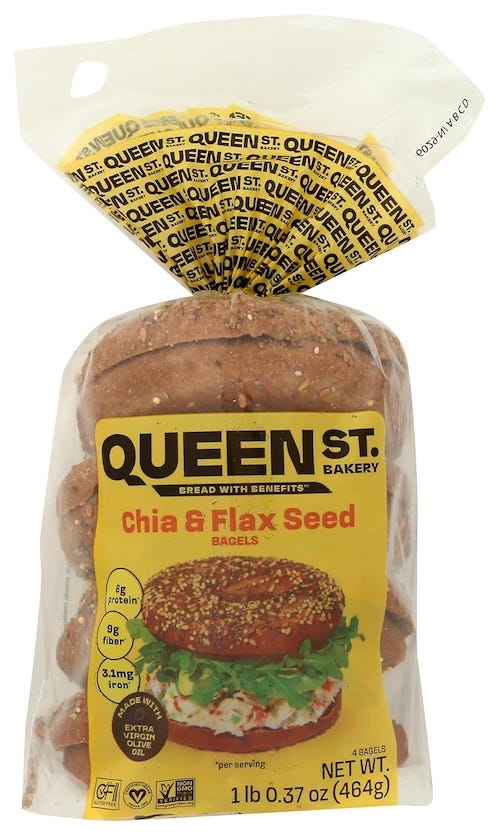
Queen Street Bakery: This brand’s Chia & Flax Seed Superfood Bagel is my favorite grocery option because each bagel has 9 grams of fiber.
Original Sunshine: These tasty bagels are made with gluten-free wheat starch (safe for celiacs but not for those with wheat allergies).
The best gluten-free bagel recipe
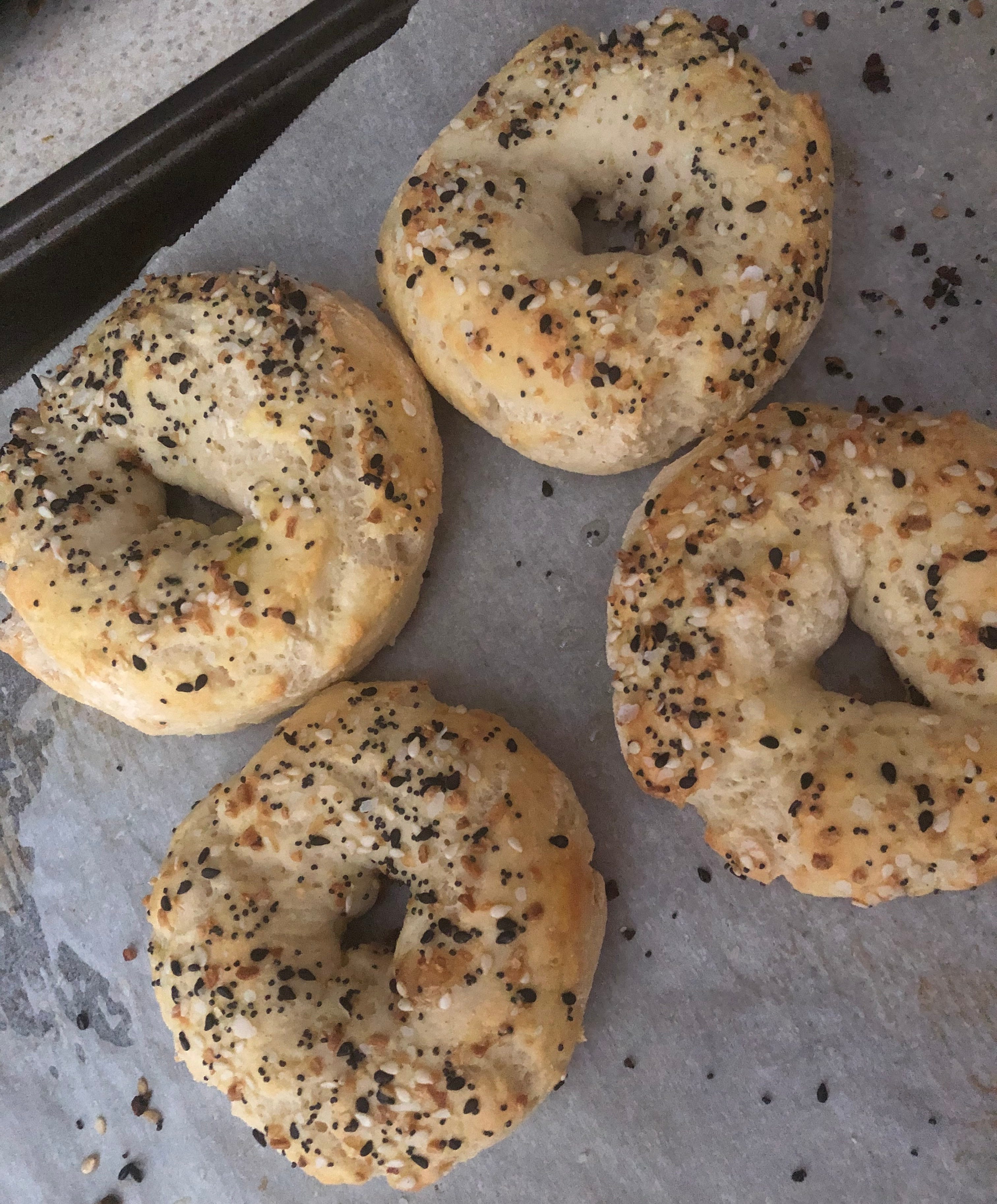
During the early days of the pandemic, I got really into making my own gluten-free bagels at home. I used this SkinnyTaste bagel recipe (I love that she tested it with regular flour and gluten-free flour to make sure it would work both ways).
The recipe was super easy to follow, and the bagels were light and fluffy. They contain only five ingredients, including Greek yogurt for some added protein, and require minimal work. I think I need to make them again soon!
What’s your favorite gluten-free bagel? How about local bagel shops that are accommodating to celiacs? Drop a comment to let me know so I can share it with my readers!
Disclaimer: If you click on a link, I may get a small commission. This helps support this newsletter so I can keep writing it.
Sources:
Selena Devries, RD, a British Columbia-based celiac dietitian
Journal of Food Protection. 2016 Feb;79(2):282-7. “Catering Gluten-Free When Simultaneously Using Wheat Flour.” https://pubmed.ncbi.nlm.nih.gov/26818989/
This is so important. There are many bagel places in NYC that claim to have GF bagels but then totally manhandle the bagels in a way that makes them immediately unsafe for those of us with celiac. I despise the gluten-free bagel round-ups by influencers who don't ever mention utensils, toasters, etc. Thanks for this post!
I ate a bagel a few days ago then got really itchy. Ugh. Then I thought “has Christina written about bagels?!!” Thanks for this!
Def gonna try those Queen St bagels!