


As both a professional marketer and someone living with celiac disease, I was disappointed by the April Fools’ campaigns a few gluten-free brands rolled out this year.
The jokes didn’t just fall flat, they revealed a deeper lack of care for the very audience these brands are meant to serve.
Ahead, I break down why these posts missed the mark and what gluten-free brands should keep in mind going forward.
Table of contents:
Why these gluten-free April Fools’ posts missed the mark
What gluten-free brands should keep in mind going forward
Why these gluten-free April Fools’ posts missed the mark
This April Fools’ Day, I spotted a couple of gluten-free businesses announcing on social media that they’d be adding gluten-containing products to their lineups.
Here’s a look at the posts (some have since been deleted):
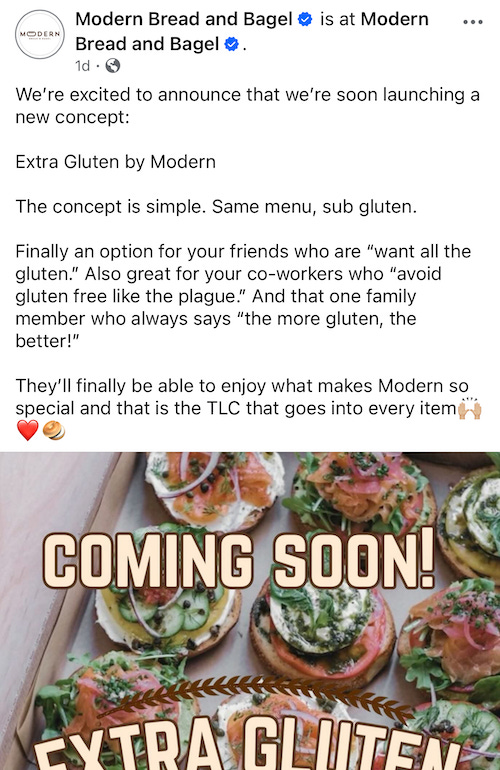
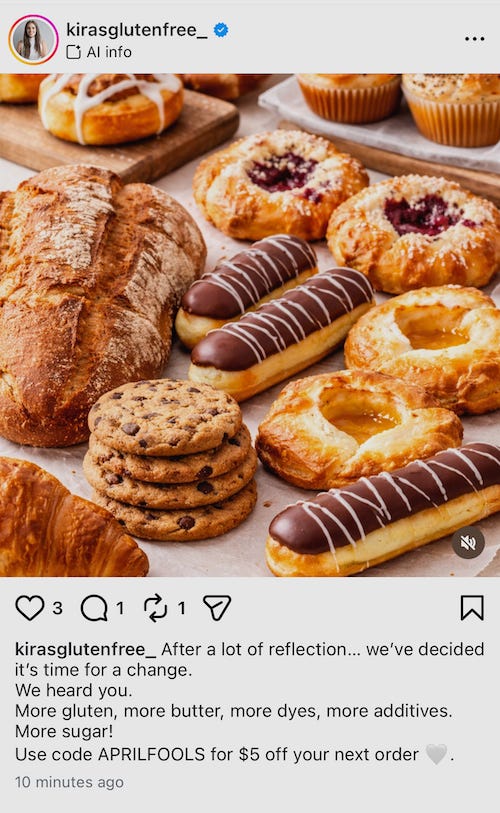
Gluten-Free Expo also made an April Fools’ post full of misinformation about gluten detection dogs along with an AI-generated ad.
You can learn more about why this particular post was in poor taste in this Instagram reel from Kendra, who educates her followers about gluten detection dogs:
In my professional opinion as a marketer, these campaigns felt lazy and uninspired. The concepts lacked originality, and, ultimately, weren’t funny.
To be fair, humor is hard. Many gluten-free businesses have small teams without dedicated creative resources, and not every brand voice lends itself naturally to jokes.
I could overlook a forgettable or mildly cringe April Fools’ post. But this goes beyond mid creative.
As someone living with celiac disease, I found these posts genuinely off-putting. For many of us, gluten-free isn’t a preference, it’s a medical necessity. That’s why these posts felt disrespectful.
Gluten-free brands are built on trust. As celiac and food allergy customers, we rely on these companies for safety, transparency, and consistency.
When these companies joke about adding gluten to their products, even momentarily, that erodes that trust and makes light of something serious.
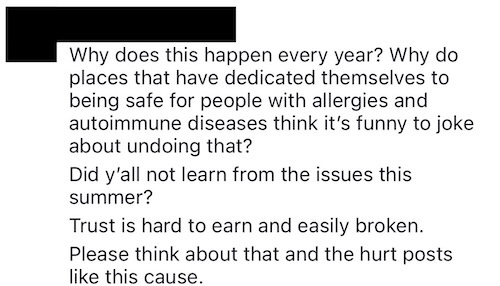
One comment on Modern Bread & Bagel’s now-deleted Instagram post captured this sentiment perfectly:
What gluten-free brands should keep in mind going forward
If brands feel compelled to participate in April Fools’ Day, there are plenty of ways to do so without alienating their core audience.
One approach I’d recommend as a marketer? Lean into humor that reflects shared experiences in the gluten-free community (like tiny bread slices) without punching down at people living with a medical condition.
Gluten-free brands can also opt out entirely. Really, you don’t have to post anything on April 1. In fact, sometimes choosing not to participate is the smarter move.
As the Content Marketing Institute puts it: “If your brand isn’t prepared to devote significant resources to develop a thoughtful, well-executed campaign, don’t do it.”
At the end of the day, gluten-free brands aren’t just in the business of selling products. They’re selling trust to a vulnerable community. And that’s not something to joke about.
Did you see the April Fools’ posts from these gluten-free businesses—and what are your thoughts on them?
I agree with you 100%. I have been in marketing in the gluten-free world for close to 20 years. I've never even entertained the idea of making an April Fool's joke for any of my GF clients. Why would you want to jeopardize the trust of your loyal customers by making a stupid joke? I find it dumb and careless. Do better, GF brands.
I saw the Modern Bread one when they posted it and was so surprised!